
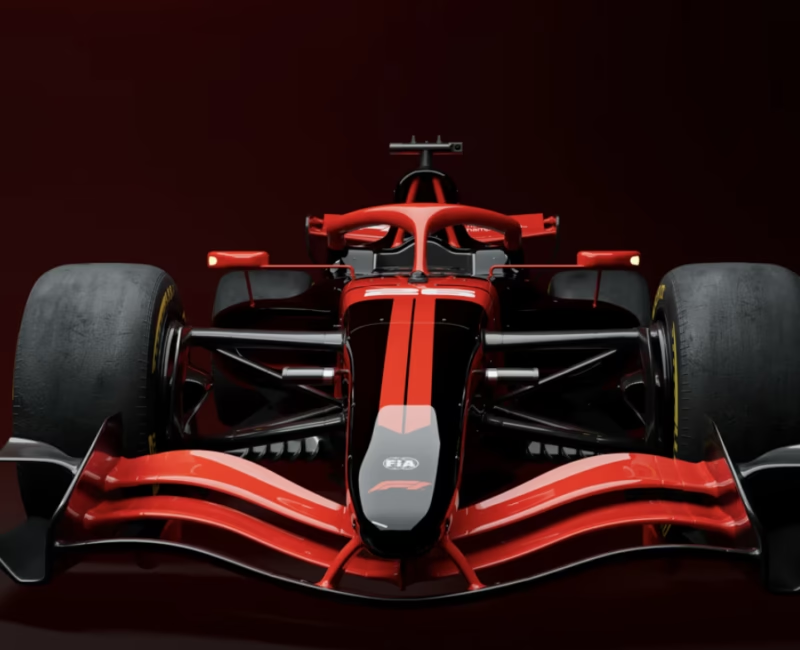
Formula 1 is getting a complete makeover. In 2026, the cars, the engines, and the way drivers race will change in the biggest way we’ve seen in years. The goal is to make racing more exciting, more fair, and much better for the planet.
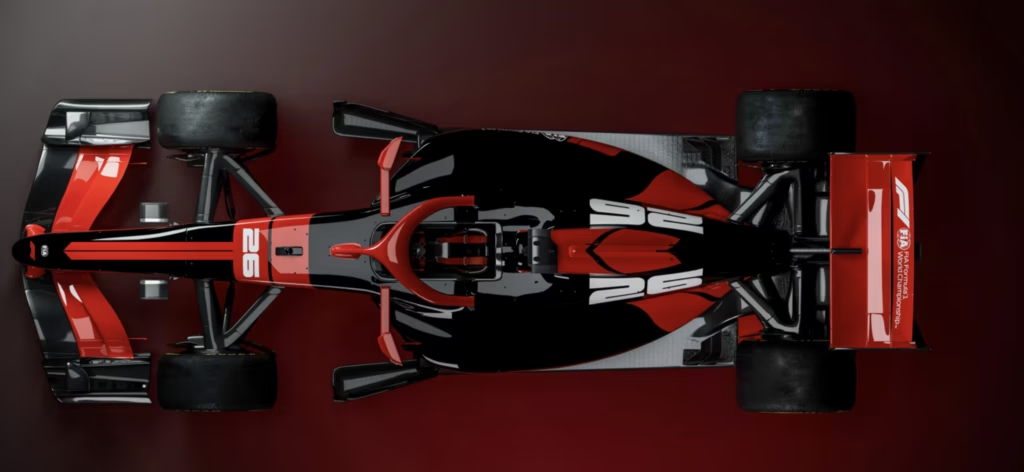
If you’ve found recent cars too big or races where it’s hard to pass, 2026 is the answer. Let’s break down exactly what’s happening, in simple terms.
Formula 1, Youtube – Everything You Need To Know About the Formula 1 2026 Regulations
1. Smaller, Lighter, and Nimbler Cars
First things first: the cars are going on a serious diet. Many fans and drivers have complained that modern F1 cars are too heavy and long, making them hard to race wheel-to-wheel. The new rules fix that.
- They’re Shrinking Them: The cars will have a shorter wheelbase (the distance between the front and back wheels) and will be narrower. Think of it like going from a large limousine to a more agile sports car. This smaller size should make them much better at tackling tight corners.
- They’re Losing Weight: The current cars are very heavy. The new rules aim to make them significantly lighter. A lighter car is more responsive—it can brake later, accelerate faster, and change direction more quickly. This should put more focus back on the driver’s skill.
- Thinner Tires: The wheels will stay 18 inches, but the tires themselves will be narrower. This reduces weight and, importantly, cuts through the air more easily, which helps with straight-line speed.
2. “Smart” Wings That Change Shape
This is one of the coolest new features. Instead of having fixed front and rear wings, the 2026 cars will have active aerodynamics—meaning parts of the wing will move by themselves to suit different parts of the track.
- Two Modes: The car will basically have two settings:
- High-Downforce Mode (for corners): The wings adjust to give maximum grip, helping the car stick to the track in twists and turns.
- Low-Drag Mode (for straights): The wings become sleeker and flatter to slice through the air, boosting top speed on long straights.
- Goodbye to DRS: This new system replaces the current DRS (Drag Reduction System). Drivers won’t press a button to open a rear wing flap anymore. Instead, the car’s computer will automatically switch between the two wing modes during the lap, making energy management a key part of the strategy.
3. A Huge Boost for Electric Power
The heart of the car—the power unit—is seeing the biggest revolution. While they’ll keep the loud 1.6-litre V6 turbo engine, the electric part of the hybrid system is getting a massive upgrade.
- 50/50 Power Split: Right now, the electric motor gives a helpful boost. In 2026, it will provide nearly half of the car’s total power. The electrical output is jumping from around 160 horsepower to over 470 horsepower. This means the engine and the electric motor will be almost equal partners.
- A Simpler, Cheaper Engine: To attract new car manufacturers like Audi and Ford, F1 is removing the most complex and expensive part: the MGU-H. This part recycled heat from the turbo. While clever, its removal cuts costs and makes entering the sport more appealing.
- A New “Overtake” Button: Drivers will get a powerful new tool. When they are within one second of the car ahead, they can activate a special “Overtake Mode” or “Manual Override.” This gives them a big burst of extra electrical power to help them make a pass, making battles on track more likely.
4. Racing on Sustainable Fuel
This might be the most important change for the future. Starting in 2026, F1 cars will run on 100% sustainable fuel.
- What does that mean? This fuel isn’t made from crude oil. It will be created in labs using sources like municipal waste (think household trash), non-food plant matter, or even carbon captured directly from the air.
- The brilliant part? It’s a “drop-in” fuel, meaning it works in normal combustion engines without any modifications. The cars will still roar and perform at insane levels, but their carbon footprint will be dramatically lower. It’s a major step in F1’s plan to be Net Zero by 2030.
5. The Driver Becomes an Energy Manager
With all this new electrical power, how drivers use it becomes a crucial skill. The 2026 cockpit will feel more like a video game, with drivers managing their energy reserves tactically.
- Attack and Defend: We already talked about the “Overtake Mode” for attacking. Drivers will also have a separate “Boost Button” they can use anywhere on the lap to defend their position. Choosing when to use these boosts will be a high-stakes decision.
- Recharge Your Own Battery: Drivers will have more control over recharging their battery. They can choose how aggressively to recharge under braking. Do they recharge a lot now to have a big boost for an attack later? Or do they keep their battery full for immediate speed? This adds a deep, strategic layer to every single lap.
6. Always Getting Safer
Every rule change in F1 comes with safety improvements. For 2026, the focus is on protecting drivers from multiple impacts in a crash.
- Stronger Roll Hoops: The structure that protects the driver’s head if the car flips over is being strengthened to handle higher forces.
- Cushioning for Second Impacts: Crashes often involve more than one hit. The new front and side structures are designed to absorb the energy of a second or third impact better, acting like an extra cushion for the driver’s survival cell.
The Bottom Line
The 2026 changes are not just small tweaks. They are a complete rethink. F1 is creating smaller, more agile cars that are powered by a smarter, more sustainable hybrid system. The idea is to create closer racing where driver skill and real-time strategy matter more than ever.
Get ready for a new era. The grid is expanding with new brands, the technology is leaping forward, and the promise is a sport that is both thrilling to watch and responsible for its future. The revolution starts in 2026.