
The NASA spacecraft carrying four astronauts splashed down as planned Friday (April 10, 2026) off the California coast, capping the U.S. space agency’s successful crewed test mission around the Moon, the first such flyby in more than 50 years.
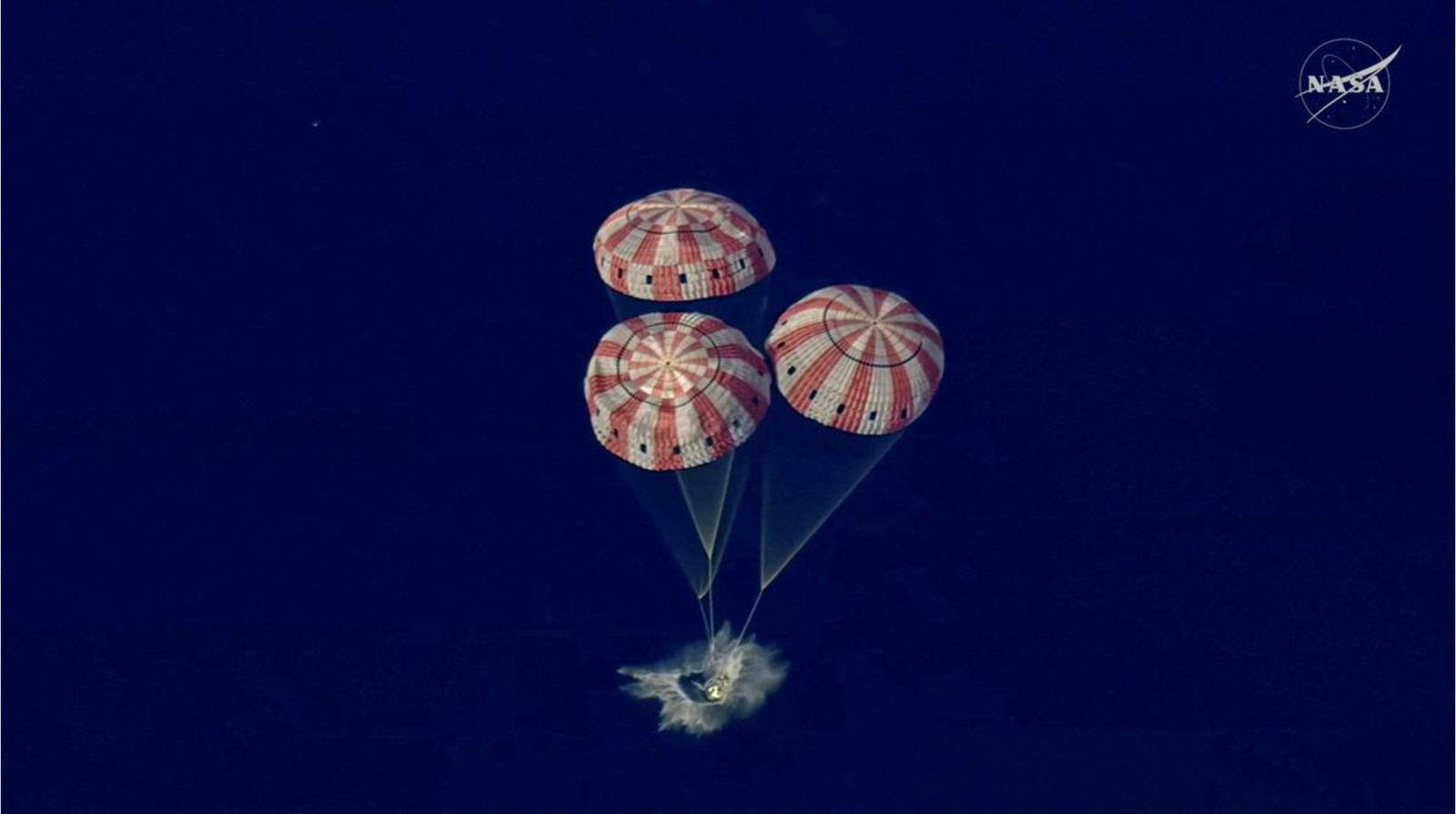
The capsule touched down in the Pacific Ocean in the early hours of Friday morning, where U.S. Navy recovery teams were stationed and waiting. All four crew members were reported in good health following the splashdown, according to NASA officials monitoring the mission from Houston.
Mission at a Glance
- Mission: NASA Artemis Crewed Lunar Flyby
- Crew: Four astronauts
- Splashdown: April 10, 2026 — Pacific Ocean, off California coast
- Significance: First crewed Moon flyby in more than 50 years
- Recovery: U.S. Navy splashdown recovery team
A Giant Leap Revisited
The mission marks a defining chapter in NASA’s Artemis programme, designed to return humans to lunar orbit and eventually to the surface of the Moon. The last time astronauts flew around the Moon was during the Apollo era, with Apollo 17 completing its mission in December 1972.
“This is a testament to the dedication of thousands of people who worked tirelessly to make this mission possible. America is back at the Moon.”
The crewed test flight was intended to validate the spacecraft’s life support systems, heat shield performance, and splashdown recovery procedures — all critical steps before NASA commits to a full lunar landing attempt later in the decade.
What Comes Next
NASA officials indicated that data gathered during this mission will inform the next phase of the Artemis programme, which aims to land the first woman and the next man on the lunar surface. International partners including the European Space Agency and the Japan Aerospace Exploration Agency are also expected to play roles in upcoming missions.
The successful splashdown is a significant win for NASA, which has faced years of delays, budget pressures, and technical challenges in its bid to return humans to deep space. With Friday’s mission complete, attention now turns to the next launch window and the ambitious goals that lie beyond Earth’s orbit.