Let’s be honest for a second. We’ve all been there.
It’s 8:30 PM on a Friday. You’ve finally closed your laptop. You’ve poured a drink. Maybe you’re just settling in to watch that show everyone’s been talking about. You take a breath, ready to detach from the week. And then, you hear it.
Ding.
It’s a WhatsApp message. From your boss. Or maybe a “High Priority” email notification lights up your phone screen like a panic flare. Your heart sinks. The relaxation evaporates. Even if you don’t reply right this second, the damage is done. Your brain has been yanked back into “work mode.” You spend the rest of the evening half-distracted. You wonder if you should just “quickly” handle it. This could save yourself the headache on Monday.
This state of constant, low-level anxiety is common in the modern Indian workplace. It is characterized by the feeling that you are never truly “off the clock.” A new bill was introduced in the Lok Sabha on Friday. If it gets its way, that anxiety might eventually become a thing of the past.
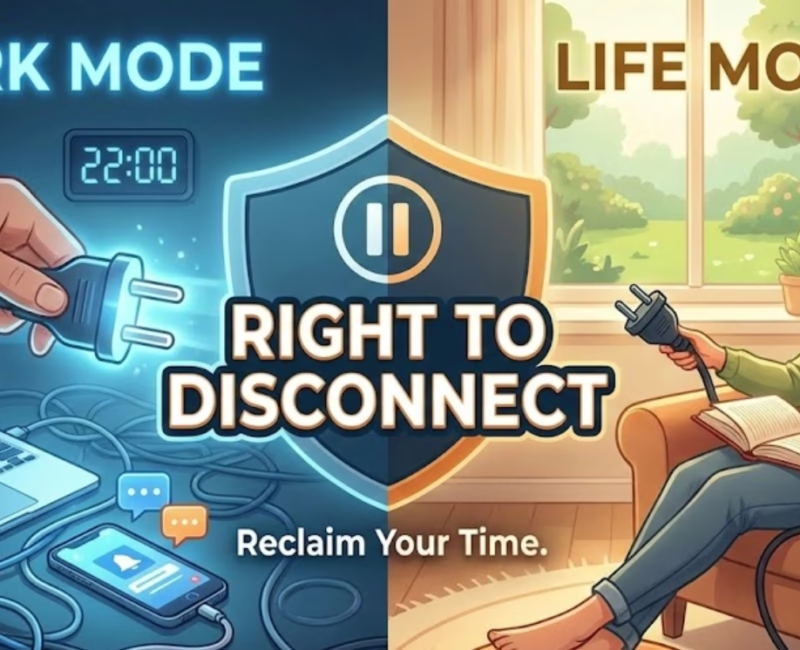
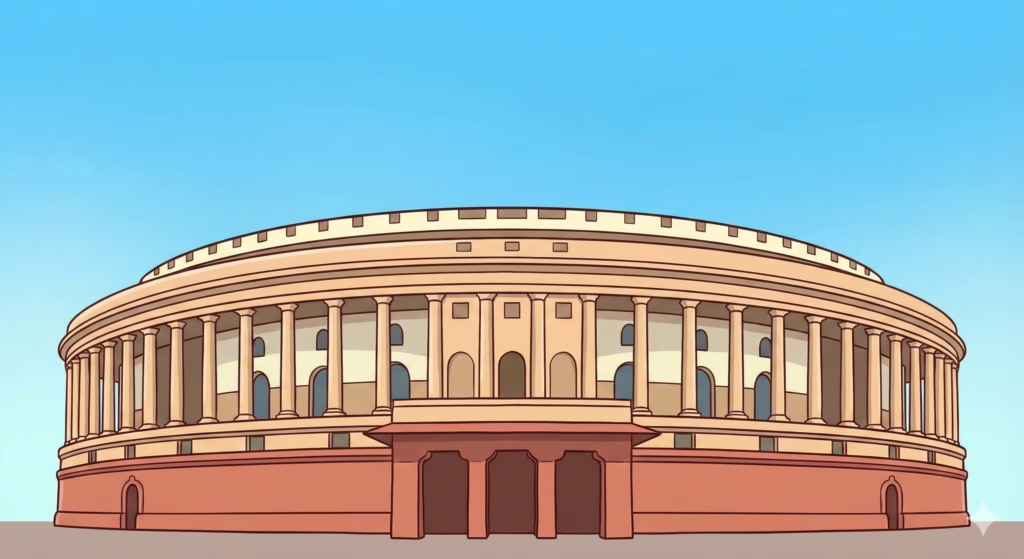
NCP MP Supriya Sule has introduced the Right to Disconnect Bill, 2025. It’s a bold and controversial piece of legislation. It is deeply necessary and asks a simple question: Do we own our time anymore?
The “Always-On” Epidemic
Before we dive into the legalese, let’s look at the reality on the ground. The smartphone was supposed to liberate us. It promised that we could work from anywhere, meaning we could spend more time at home. Instead, it did the opposite: it brought the office into our homes. It put the conference room on our dining tables and the manager in our pockets.
In India, this culture is particularly aggressive. We have a deep-seated cultural hierarchy that makes saying “no” to a superior feel like career suicide. If the boss calls on Sunday, you pick up. If the client emails at midnight, you reply. We wear our exhaustion like a badge of honor.
But Supriya Sule’s bill argues that this isn’t “dedication”—it’s a public health crisis. The bill’s introduction statement highlights terms we all feel but rarely name. These include “Telepressure,” the urge to reply now, “Info-obesity,” which means drowning in updates, and good old-fashioned burnout.
So, What Does the Bill Actually Say?
The Right to Disconnect Bill, 2025, isn’t just a suggestion box idea; it’s a proposed law with teeth. It was tabled during a packed winter session of Parliament. This occurred amidst the chaos of voter roll revisions. This shows just how serious Sule is about getting this on the record.
Here is the breakdown, in plain English:
1. The Right to Say “Not Now”
The core of the bill is simple: You have the legal right to disconnect. That means once your shift is over, you are under no obligation to answer calls, texts, emails, or Zoom invites. Whether it’s a holiday, a weekend, or just 7:00 PM on a Tuesday—your time is yours.
2. The “No Grudge” Clause
This is the part that usually scares employees. “Sure, I can ignore the call, but will I get fired for it?” The bill explicitly states that employees cannot face disciplinary action for refusing to respond after hours. Your boss can’t write you up. They can’t cut your bonus. They can’t stall your promotion just because you didn’t reply to an email during your family dinner.
3. It Covers Everything
The bill is smart enough to know that work doesn’t just happen on email anymore. It covers all forms of communication. WhatsApp, Telegram, Slack, Teams, Signal, regular phone calls—if it beeps, you can mute it.
4. The “Pay Me” Principle
If you do choose to work after hours, perhaps because you want to finish a project, or you’re feeling generous, the bill suggests you shouldn’t be doing it for free. It proposes that work done outside agreed hours should be compensated at the overtime wage rate. No more “freebies” for the company.
But What About Emergencies? (The Reality Check)
Of course, the immediate counter-argument is: “What if the server crashes?” “What if there’s a PR crisis?” “What if a patient is critical?”
The world doesn’t stop just because we clocked out. The bill actually accounts for this. It’s not a blanket ban on all communication forever. It proposes a Negotiated Mechanism.
This means companies and employees have to sit down and agree on what constitutes an “emergency.” They need to set up protocols. Maybe the IT guy agrees to be on call one weekend a month, but he knows about it in advance. Maybe the PR team has a rotating roster for crisis management.
The key word here is consent. It moves us from a system where “everyone is available always.” Now, it transitions us to a system where “specific people are available at specific times,” and they agreed to it.
The Penalty for Breaking the Rules
To ensure companies don’t just laugh this off, the bill proposes a hit to the wallet. Organizations that violate these rights could face a penalty amounting to 1% of the total employee remuneration. For a large company, that is a massive chunk of change. It’s designed to force HR departments to rewrite their policies.
Why Is This Happening Now?
Supriya Sule actually tried to introduce a similar bill back in 2019. So, why bring it back now, in 2025?
Because the world has changed. The post-pandemic era blurred the lines between work and life until they effectively vanished. Working from home (WFH) became “Living at Work.” The mental health toll is now undeniable. We are seeing record levels of resignation, “quiet quitting,” and stress-related illnesses among young professionals.
India currently has one of the longest work weeks in the world (often exceeding 48 hours in practice). We are competing in a global market, yes, but we are burning out our greatest asset—our people—to do it.
The Global Perspective: We Aren’t the First
If this sounds like a pipe dream, look abroad. This isn’t a new concept globally.
- France pioneered this years ago. In France, if you work for a company with more than 50 people, you have a legal right to ignore that email.
- Portugal made it illegal for bosses to text employees after hours.
- Australia recently joined the club with similar “right to disconnect” laws.
These countries realized that a rested worker is a better worker. Creativity, problem-solving, and efficiency all drop when the brain never gets a chance to switch off.
Will It Actually Pass?
Here is the hard truth: Private Member’s Bills (bills introduced by MPs who aren’t ministers) rarely become law in India. The path from “Tabled in Parliament” to “Official Act” is long and full of bureaucratic potholes.
However, that doesn’t mean this is a waste of time. By introducing this bill, Supriya Sule is forcing a conversation. She is making the government, corporate leaders, and unions talk about it. She is putting the idea into the public consciousness that constant connectivity is not a requirement for employment.
The Bottom Line
Whether this bill passes in 2025 or not, the “Right to Disconnect” is a concept whose time has come.
For too long, we have accepted that the price of having a job is the loss of our personal peace. This bill challenges that assumption. It reminds us that we work to live, not the other way around.
The next time your phone buzzes at 9:00 PM with a “quick question” from the office, remember this. You aren’t being lazy for wanting to ignore it. You’re just human. And maybe, in the near future, the law will finally have your back.