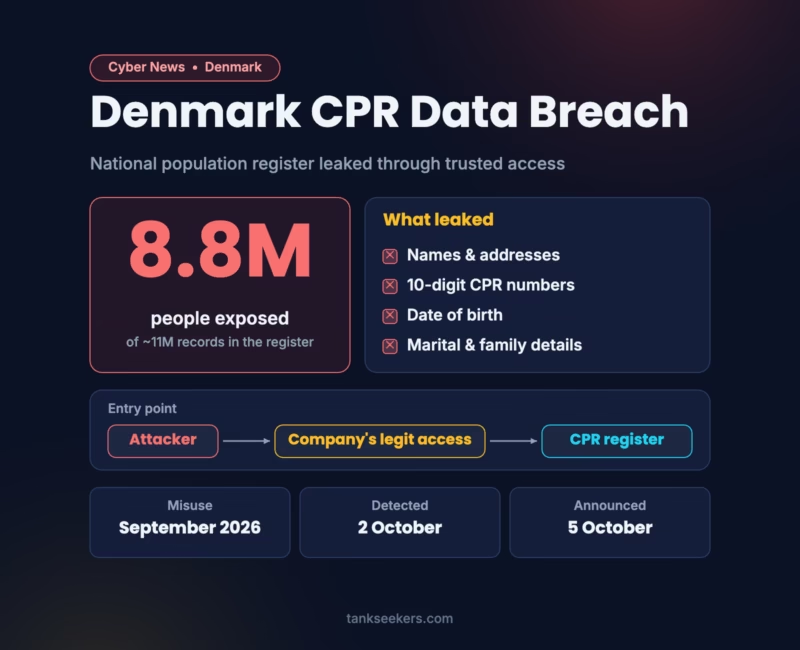
Imagine if the names, addresses and Aadhaar-style ID numbers of almost an entire country leaked in one go. That’s roughly what the Denmark CPR data breach looks like. Specifically, on 5 October 2026, the Danish government said that someone had taken the data of 8.8 million people from its national population register, the CPR (Central Person Register).
And here’s the twist. The attackers didn’t “break into” the government system from outside. Instead, they misused the legitimate access of a private Danish company. So, let’s unpack the Denmark CPR data breach in simple words.
⚡ Denmark CPR Data Breach: Quick Facts
- Who: 8.8 million people in Denmark’s CPR register
- When: Misuse in September 2026, spotted on 2 October, announced on 5 October
- How: Misuse of a private company’s authorized access
- What leaked: Names, addresses, CPR numbers, birth and family details
What Is the CPR Register?
CPR is Denmark’s central civil registration system. In fact, every person registered in Denmark gets a 10-digit CPR number. As a result, people use this number almost everywhere: at hospitals, banks, the tax office, schools and government services.
For instance, Indian readers can think of it as Aadhaar and the birth, death and address records rolled into one. Because Danes use it for nearly everything, it’s one of the most sensitive databases in the country.
Interestingly, the register holds around 11 million records, even though Denmark has only about 6 million people. That’s because it also keeps records of people who have emigrated or died.
What Exactly Happened in the Denmark CPR Data Breach?
First, here’s the timeline, based on official statements and news reports:
| Date | What happened |
|---|---|
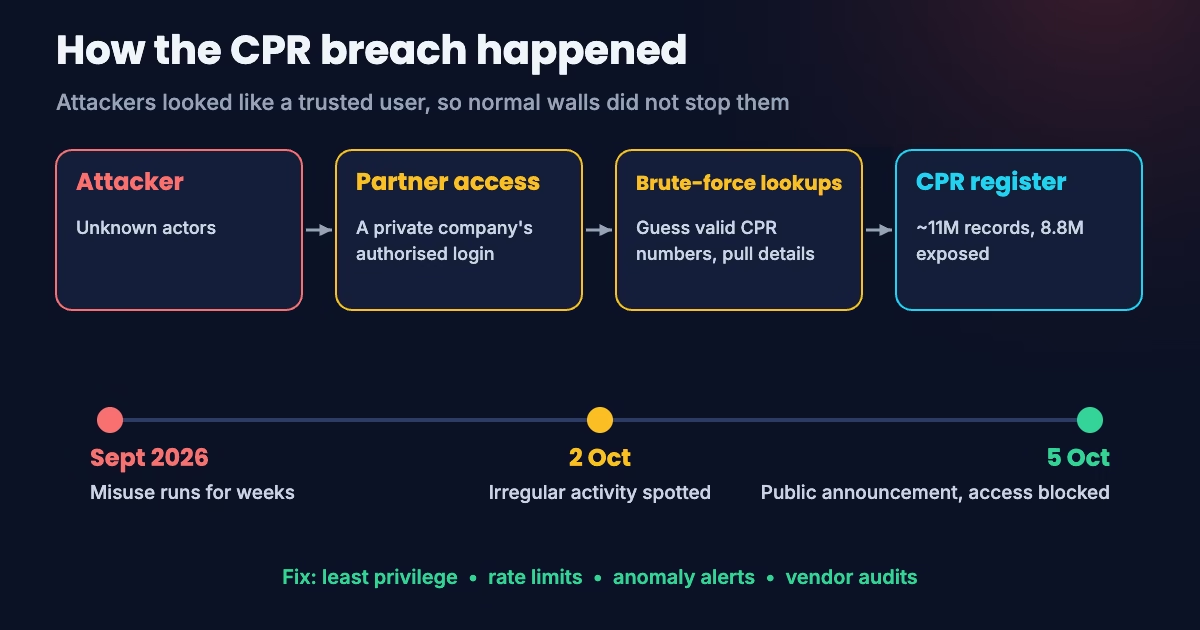
| September 2026 | Unknown people used a private company’s authorized access to run unauthorized searches in the CPR system. |
| 2 October 2026 | Then, the CPR administration noticed irregular activity. |
| 5 October 2026 | The Danish government announced the breach. Officials blocked the company’s access, and police opened an investigation. |
According to BleepingComputer, the attackers reportedly used brute-force methods. In other words, they guessed valid CPR numbers and then pulled the details linked to each one. So far, officials haven’t named the company, and nobody has identified the attackers yet.
Denmark’s Digitalisation Minister, Christina Egelund, called it a “deeply serious incident” and ordered a full security review. In addition, the government has informed the Danish Data Protection Agency (Datatilsynet).
What Data Was Exposed in the Denmark CPR Data Breach?
In total, the breach hit about 8 out of every 10 records in the register. For example, reported data includes:
- Full names and addresses
- CPR numbers (national ID numbers)
- Date of birth and birth registration details
- Marital status and family relationships
- Some other civil details, such as church membership status (as The Copenhagen Post reported)
There is one piece of good news, though. People who had signed up for name and address protection, a privacy option in Denmark, stayed safe. Also, reports so far don’t mention any passwords or bank details in the leak.
Why Is the Denmark CPR Data Breach So Serious?
1. You can’t “reset” an ID number
For instance, if your password leaks, you simply change it. A national ID number, however, usually stays with you for life. Therefore, the risk lasts for years.
2. It’s perfect fuel for scams
For example, with your name, address, family details and ID number, a fraudster can sound very convincing on a call or in an email. Security people call this social engineering, because it targets people rather than machines.
3. Nobody noticed for weeks
The misuse went on through September, yet the CPR team only spotted it on 2 October. Naturally, slow detection means more data walks out the door.
4. It may attract more than ordinary criminals
Moreover, experts quoted by IT Security Guru warned that a dataset covering most of a country could also draw state-backed spying groups, not just fraud gangs.
The Real Lesson From the Denmark CPR Data Breach: Third-Party Risk
In general, many government and big company systems give access to outside partners, such as vendors, verification agencies and software suppliers. In short, security teams call this third-party access.
The Denmark CPR data breach shows the problem clearly: your security is only as strong as your weakest partner. If someone misuses one partner’s account, the attacker looks like a “trusted user”. Consequently, normal security walls may not stop them at all.
Fortunately, a few good practices reduce this risk:
- Least privilege: give a partner only the data they truly need.
- Rate limits: stop any single account from making thousands of lookups.
- Anomaly monitoring: raise an alert when an account suddenly behaves differently.
- Regular vendor audits: review your partners’ security, not just your own.
Why Should Indians Care About the Denmark CPR Data Breach?
Similarly, India runs huge digital ID systems like Aadhaar, which UIDAI manages. Moreover, many banks, telecoms and fintech apps connect to these systems through authorized partners. So, the Denmark CPR data breach is a reminder that the risk isn’t only “hackers breaking in”. In other words, it’s also trusted access going wrong.
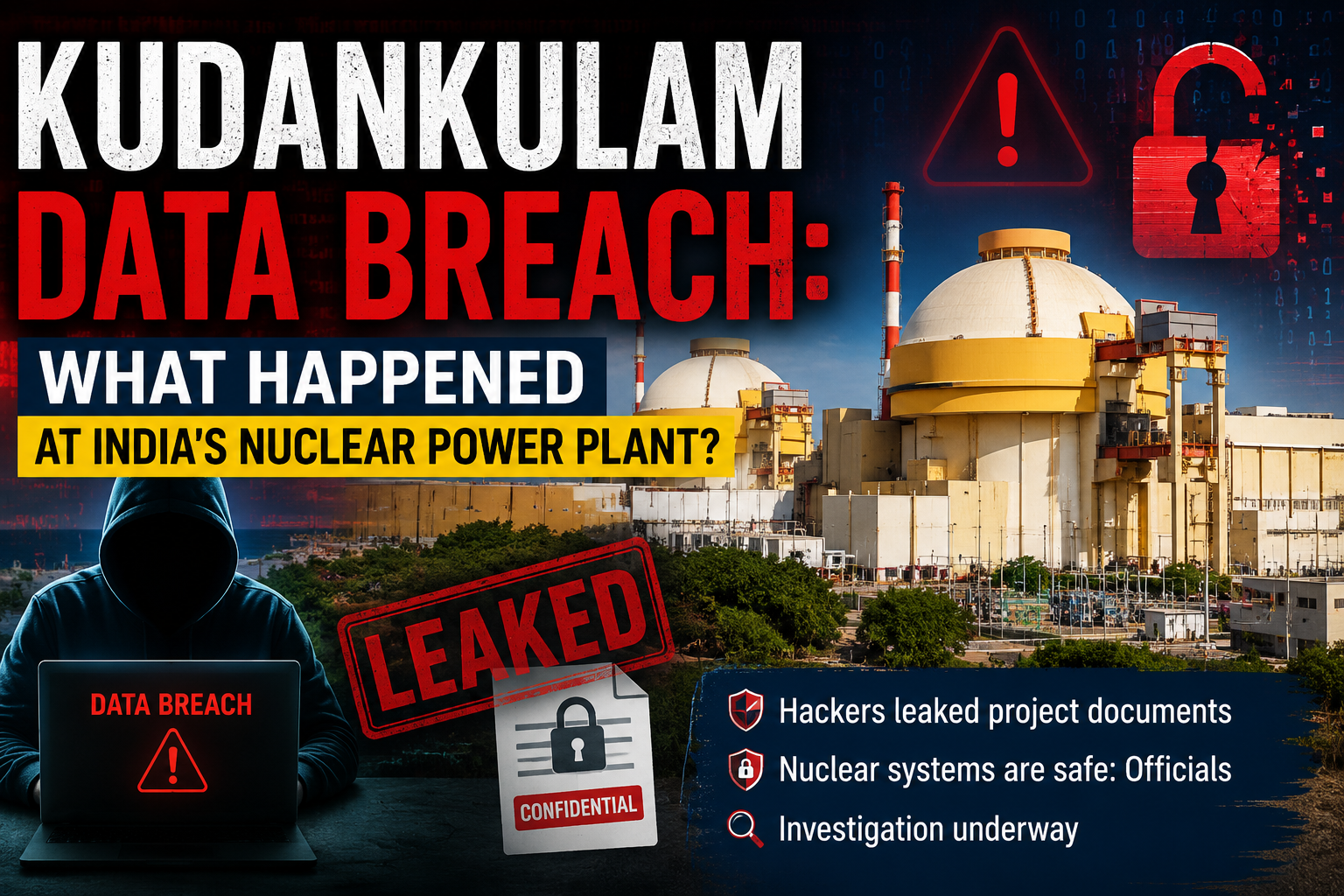
India’s Digital Personal Data Protection (DPDP) Act, 2023 puts duties on organizations that handle personal data. For example, they must take reasonable security safeguards and report breaches. Clearly, cases like this one show why such rules matter. If you follow Indian security news, my post on the Kudankulam data breach is worth a read too.
What Should You Do After the Denmark CPR Data Breach?
After the Denmark CPR data breach, it’s worth building a few habits. Whether you live in Denmark or India, these habits protect you because they work when ID data leaks:
- Don’t trust a caller just because they know your details. After a leak, your name, address and ID number may already be out there.
- Never share OTPs, passwords or PINs by phone, SMS, email or WhatsApp. After all, no genuine bank or government office asks for them.
- Lock your Aadhaar biometrics through the mAadhaar app or the UIDAI website when you’re not using them.
- Use masked Aadhaar wherever a full number isn’t required.
- Check bank and credit reports regularly for loans or accounts you didn’t open.
- Report cyber fraud quickly on the National Cyber Crime Reporting Portal or call the 1930 helpline.
Key Takeaways From the Denmark CPR Data Breach
- The Denmark CPR data breach exposed 8.8 million people, and the government announced it on 5 October 2026.
- Attackers misused a private company’s legitimate access. It wasn’t a classic outside hack.
- Names, addresses, CPR numbers and family details leaked, while people with protected addresses stayed safe.
- National ID numbers can’t change easily, so the scam risk is long-term.
- Third-party access control is now one of the biggest security challenges for governments worldwide.
Frequently Asked Questions (FAQ)
1. What is the CPR number?
Simply put, it’s Denmark’s 10-digit personal ID number. Also, Danes use it for healthcare, banking, tax and public services.
2. How many people did the Denmark CPR data breach affect?
The Denmark CPR data breach hit about 8.8 million people, out of around 11 million records in the register. That total also includes emigrants and people who have died.
3. Did hackers break into the government system directly?
No. Instead, reports say the attackers misused a private Danish company’s authorized access. However, officials haven’t named the company yet.
4. Did passwords leak in the Denmark CPR data breach?
So far, official statements and reports mention names, addresses, CPR numbers and civil details. They don’t mention passwords or bank data.
5. Who is investigating the Denmark CPR data breach?
First, Danish police are investigating. In addition, the government has informed the Danish Data Protection Agency (Datatilsynet).
6. Is there a lesson for India?
Yes. Above all, large ID systems with many partners must tightly control and monitor partner access. Meanwhile, citizens should stay alert to scam calls that use leaked details.
GK Practice Questions
Multiple Choice Questions (MCQs)
- The CPR register breached in October 2026 belongs to which country?
(a) Norway (b) Sweden (c) Denmark (d) Finland - What does CPR stand for in the Danish context?
(a) Cyber Protection Registry (b) Central Person Register (c) Citizen Privacy Record (d) Central Police Register - Roughly how many people did the CPR breach affect?
(a) 2.2 million (b) 5 million (c) 8.8 million (d) 11 million - How many digits does a Danish CPR number have?
(a) 8 (b) 10 (c) 12 (d) 16 - The attackers reportedly got in by misusing:
(a) A ransomware gang’s malware (b) A private company’s legitimate access (c) A stolen government laptop (d) A satellite link - In India, which body manages Aadhaar?
(a) CERT-In (b) NPCI (c) UIDAI (d) MeitY’s NIC
Short Answer Questions
- On which date did Denmark publicly announce the CPR breach?
- Name the Danish minister who called the breach a “deeply serious incident”.
- What is the name of Denmark’s data protection authority?
- Which group of people stayed safe in the breach?
- What is “third-party risk” in cybersecurity?
Descriptive Questions
- Explain why a breach of a national ID register is more dangerous than a password leak. Use the Denmark CPR case as an example.
- What lessons can India draw from the Denmark CPR breach for protecting systems like Aadhaar? Suggest at least four measures.
✅ Show Answer Key
MCQs: 1 – (c), 2 – (b), 3 – (c), 4 – (b), 5 – (b), 6 – (c)
Short answers: 1. 5 October 2026. 2. Christina Egelund, the Digitalisation Minister. 3. Datatilsynet, the Danish Data Protection Agency. 4. People registered for name and address protection. 5. The risk that a vendor, partner or supplier with access to your systems becomes the path for an attack or data leak.
Descriptive (key points): 1. ID numbers can’t be reset like passwords. The data stays useful to criminals for years, it fuels convincing scams and identity fraud, and it may attract state actors. 2. Least-privilege access for partners, rate limits and anomaly monitoring on lookups, regular vendor audits, faster breach detection and reporting under the DPDP Act, and citizen awareness (biometric lock, masked Aadhaar, never sharing OTPs).
🎮 Games: Test Yourself on the Denmark CPR Data Breach
Now, let’s make it fun. First, try the quick quiz. Then, play “Scam or Safe?” and see if you can spot a fraud call after a leak.
Sources
- BleepingComputer – Denmark population registry data breach affects 8.8 million people
- The Copenhagen Post – CPR data breach exposes personal details of 8.8 million people
- Insurance Journal (Bloomberg) – Denmark Data Breach Exposes 8.8 Million People’s Personal Data
- IT Security Guru – Denmark’s CPR breach and trusted third-party access