Just a few weeks after OpenAI launched GPT-6 Astra, Google has hit back. On September 30, 2026, Google announced Gemini 4 Argon, the first model in its Gemini 4 family and, according to Google, its most capable AI model so far.
But there is a twist. Most of us cannot use it yet. Google is first giving Argon to a small group of cybersecurity defenders, and only later to paying customers. So what is Argon, how good is it, and why the slow rollout? Let’s break it down in simple words.
What is Gemini 4 Argon?
Gemini 4 Argon is a large language model (LLM) built by Google DeepMind. Think of it as the “brain” that will later power the Gemini app, Google’s developer tools and many Google products.
Google says Argon is designed for long and complex work, not just quick chat answers. Its main strengths, as described by Google and covered by several tech outlets, are:
- Coding and engineering: debugging, fixing bugs and moving large codebases from one language to another (for example, C++ to Rust).
- Cybersecurity defence: finding software vulnerabilities, checking them and suggesting patches.
- Office and knowledge work: legal, finance and automation-style tasks.
- Video and visual understanding: reading long videos, charts and images.
- Long, multi-step reasoning: working through tasks that need many steps over a long time.
Why is Google releasing Gemini 4 Argon slowly?
This is the most interesting part of the story. Instead of opening Argon to everyone on day one, Google is starting with trusted cyber defenders through a programme it calls Fairwind.
The reason is simple. A model that is very good at finding bugs in software can help defenders fix them, but in the wrong hands it could also help attackers. So Google wants security teams to get a head start. VentureBeat reports that Google is also taking part in the US government’s voluntary process for testing powerful models before wide release.
Google says wider access will come “as soon as possible”, starting with paid API customers and Google AI Ultra subscribers. There is no confirmed date yet for free Gemini app users or for India specifically.
We have seen this pattern before. Anthropic also kept some of its strongest security-focused models limited to selected partners. It looks like “cyber first, everyone later” is becoming the new normal for frontier AI.
How good is Argon? The benchmark numbers
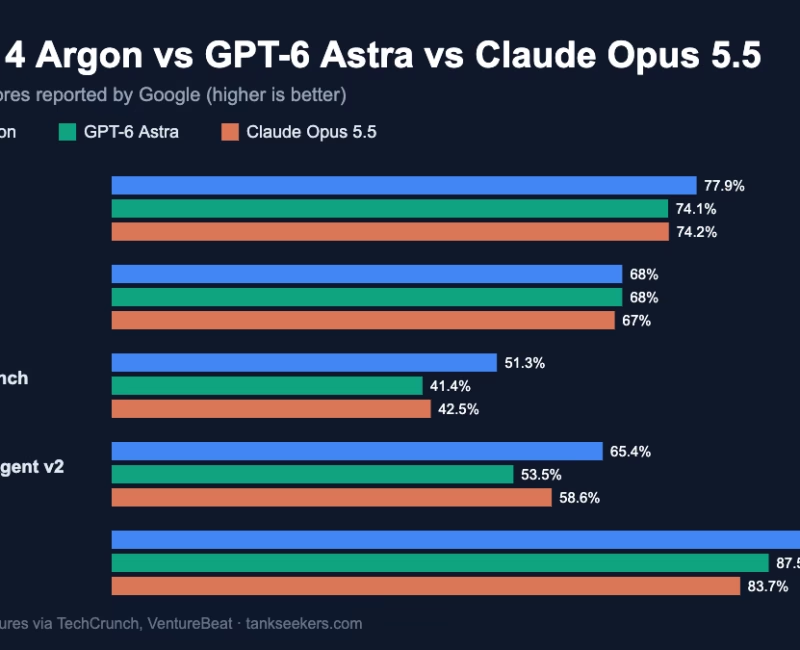
Benchmarks are tests used to compare AI models. According to figures reported by VentureBeat, Argon leads or ties in 13 of the 18 benchmarks Google shared. Here are some of the key ones, compared with OpenAI’s GPT-6 Astra and Anthropic’s Claude Opus 5.5:
| Benchmark (what it tests) | Gemini 4 Argon | GPT-6 Astra | Claude Opus 5.5 |
|---|---|---|---|
| DeepSWE v1.1 (software engineering) | 77.9% | 74.1% | 74.2% |
| CWE-bench v1 (fixing security bugs) | 68% | 68% | 67% |
| AutomationBench (automating tasks) | 51.3% | 41.4% | 42.5% |
| Vals Finance Agent v2 (finance tasks) | 65.4% | 53.5% | 58.6% |
| LVBench (long video understanding) | 91.7% | 87.5% | 83.7% |
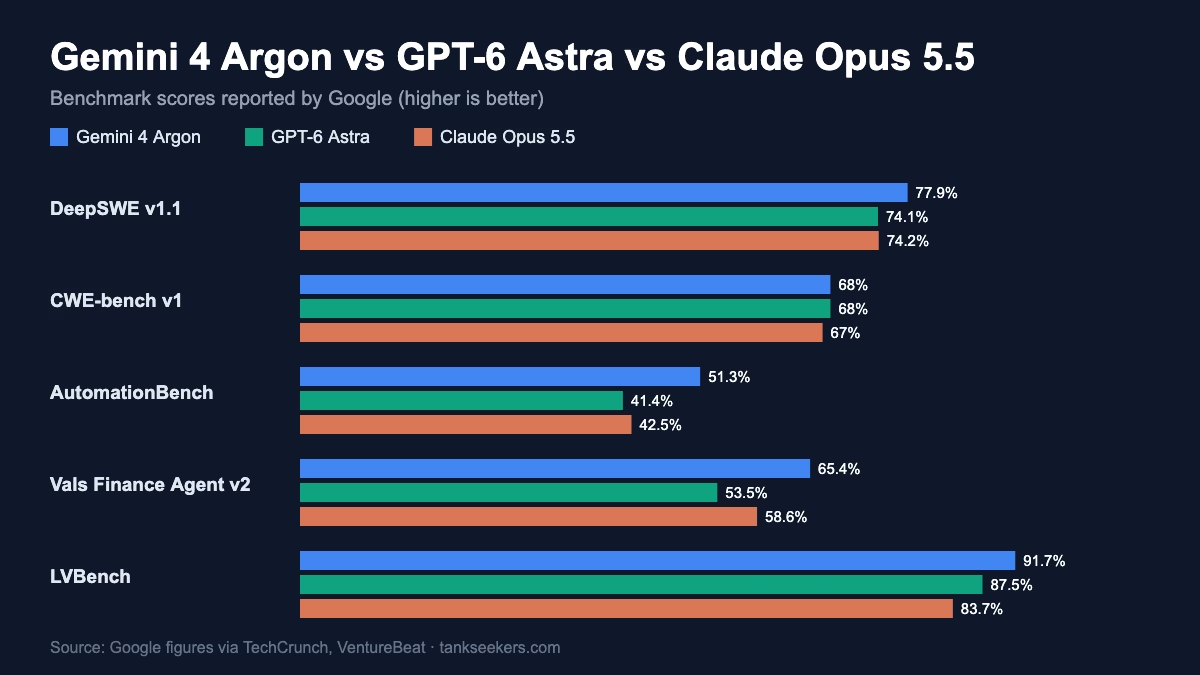
Argon does not win everything. On some tests, such as FrontierSWE v2 and Terminal-Bench Science, GPT-6 Astra reportedly still scores higher.
Important: these numbers come mainly from Google itself. Companies naturally highlight the tests where they look best. As we explained in our earlier post on GPT-6 Astra vs Claude Fable 5.1, the “best” model often depends on who is testing and what task you care about. Wait for independent results before treating any model as the clear winner.
Other key features of Gemini 4 Argon
1. A huge 1-million-token output
Earlier Gemini models could write up to about 64,000 tokens in one reply. Argon can produce up to 1 million tokens of output. In simple words, it can write very long answers, such as large chunks of code or long reports, in one go.
2. Better protection against prompt injection
Prompt injection is when hidden text in a web page, email or file tricks an AI into doing something it should not. Google says Argon was attacked successfully in only about 0.7% of cases on the Gray Swan indirect prompt-injection test. That is a good sign for AI agents that read emails and websites, though no model is fully safe.
3. Real work inside Google
Google says it has already used Argon internally. In one example reported by VentureBeat, it helped rewrite the libgav1 video decoder, replacing about 32,000 lines of code and making it around 2.7 times faster. Google also says it helped free up more than 300 TiB of memory across its data centres.
How much will Gemini 4 Argon cost?
For developers using the API, Google has announced introductory pricing:
- Input: $2 per million tokens
- Output: $10 per million tokens
- Cached input: 95% cheaper than normal input
After the introductory period, prices are set to double to $4 (input) and $20 (output) per million tokens. Even then, reports say this is cheaper than GPT-6 Astra and similar to Claude Opus 5.5. For Indian startups building AI products, cheaper top-level models are good news.
Why does this matter for India?
- Developers and startups: Strong coding ability at a lower price can cut costs for Indian SaaS and IT service companies once API access opens.
- IT services jobs: Code migration and bug fixing are big parts of Indian IT work. Models like Argon will change how these projects are done, so learning to work with AI tools is now a must-have skill.
- Cybersecurity teams: Banks, NBFCs and government bodies may soon get better AI tools for finding weak spots, but attackers may get them too.
- Students: Exams and interviews increasingly ask about AI trends. Knowing names like Gemini 4 Argon, GPT-6 Astra and Claude is useful GK.
Key takeaways
- Google announced Gemini 4 Argon on September 30, 2026, the first Gemini 4 model.
- It is first available only to cyber defenders via the Fairwind Program; paid API and AI Ultra users come next.
- Google’s numbers show Argon leading in coding, automation, finance and video tests, but GPT-6 Astra still wins some benchmarks.
- It can output up to 1 million tokens and has stronger prompt-injection defences.
- Introductory API pricing is $2 input / $10 output per million tokens.
FAQ
Can I use Gemini 4 Argon in the Gemini app right now?
Not yet. As of now it is limited to selected cybersecurity partners. Google says Google AI Ultra subscribers and paid API customers will get it next.
Is Gemini 4 Argon better than GPT-6 Astra?
On many of the tests Google shared, yes. But Astra still leads on some benchmarks, and most numbers come from Google. Independent tests will give a clearer picture.
What is the Fairwind Program?
It is Google’s programme for giving early access to trusted cyber defenders so they can use the model to find and fix security flaws first.
What does “1 million output tokens” mean?
A token is a small piece of text, roughly part of a word. A 1-million-token limit means the model can write extremely long outputs, such as full code files or long reports, in a single response.
Is it available in India?
Google has not shared India-specific dates. When it opens to API and AI Ultra users, it is expected to follow Google’s usual country availability, but this is not confirmed yet.